If you’ve ever sent a text message, you’ve probably used SMS without even thinking about it. Many people search for SMS meaning in text because they see the term in messaging apps, mobile settings, or online conversations and want to know exactly what it means.
While modern chat platforms like WhatsApp and Instagram have changed the way we communicate, SMS remains one of the most common messaging methods worldwide.
Understanding SMS can help you communicate more effectively and avoid confusion when discussing texting, mobile plans, or messaging services. Whether you’re a student, professional, or casual smartphone user, knowing the meaning and use of SMS is useful in everyday life.
This guide explains what SMS means, where it came from, how people use it today, and why it continues to play an important role in digital communication.
What Does SMS Mean in Text & Chat?
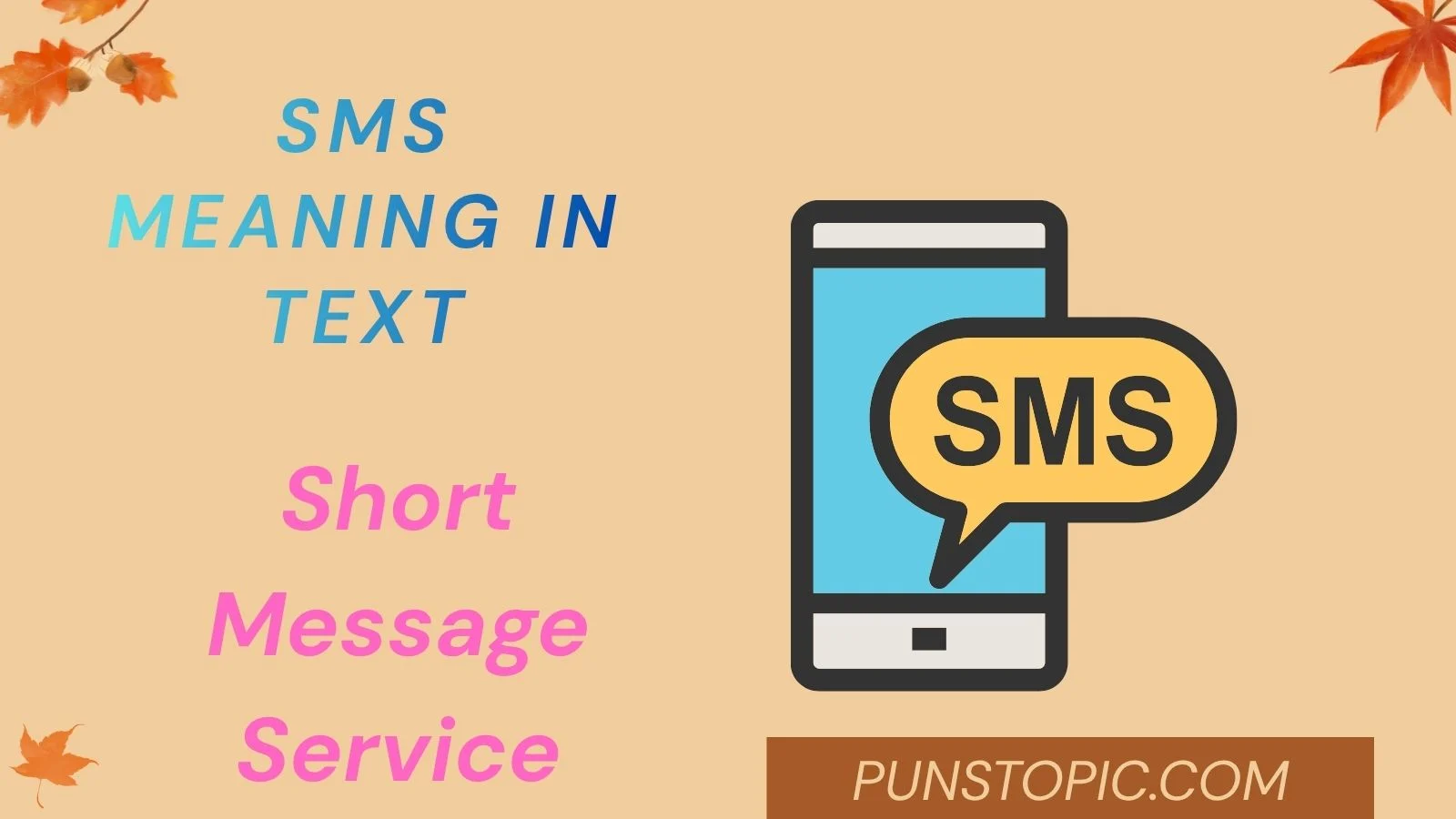
In text and chat conversations, SMS stands for Short Message Service. It refers to the standard technology used to send text messages between mobile phones.
Unlike internet-based messaging apps, SMS messages travel through cellular networks. This means you can send and receive SMS messages even if you do not have an internet connection, as long as your phone has mobile service.
People often use the term SMS when discussing:
- Mobile texting
- Phone messaging plans
- Verification codes
- Business notifications
- Customer alerts
For example:
- “I’ll send you the code by SMS.”
- “Did you get my SMS?”
- “The bank sent an SMS verification message.”
SMS has become so common that many people simply call it a “text message.” In everyday conversation, the terms are often used interchangeably.
Quick Examples
- SMS = Regular text message
- SMS alert = Notification sent by text
- SMS code = Verification code sent to your phone
- SMS service = Text messaging service
Although newer messaging platforms exist, SMS remains a simple and reliable communication tool.
Full Form, Stands For & Short Meaning of SMS
The full form of SMS is:
Short Message Service
It is a telecommunications service that allows users to exchange short text messages between mobile devices.
Breaking Down the Full Form
- Short = Limited message length
- Message = Written communication
- Service = Mobile network feature
When SMS was first introduced, messages were limited to 160 characters. This limit helped define the service and influenced the development of modern texting culture.
Short Meaning of SMS
The simplest meaning of SMS is:
A standard text message sent through a mobile network.
Many businesses and organizations use SMS because it reaches users quickly and works on almost every mobile phone.
Examples include:
- Appointment reminders
- Delivery updates
- Security verification codes
- Emergency alerts
- Promotional offers
Today, SMS is recognized globally as one of the foundations of mobile communication.
Origin, History & First Known Use of SMS
SMS was developed during the early years of digital mobile communication.
The concept emerged in the 1980s when telecommunications engineers sought a way to send short text-based messages over mobile networks.
The first SMS message was sent in December 1992. The message simply read:
“Merry Christmas“
This historic text was sent from a computer to a mobile phone and marked the beginning of a communication revolution.
Key Milestones
- 1980s: SMS concept developed
- 1992: First SMS message sent
- Late 1990s: SMS adoption increases
- Early 2000s: Text messaging becomes mainstream
- 2010s: SMS supports authentication and business messaging
SMS helped create many texting habits that remain popular today, including abbreviations, emojis, and quick conversational replies.
Despite competition from internet messaging apps, SMS continues to be widely used worldwide.
How People Use SMS in Daily Conversations
SMS is used for both personal and professional communication.
People choose SMS because it is:
- Fast
- Easy
- Reliable
- Available on nearly every phone
Personal Uses
Friends and family often use SMS to:
- Share updates
- Confirm plans
- Send reminders
- Check in quickly
Examples:
- “I’m on my way.”
- “Call me when you’re free.”
- “See you at 7!”
Professional Uses
Businesses use SMS for:
- Appointment confirmations
- Customer support
- Delivery notifications
- Authentication codes
Examples:
- “Your package arrives tomorrow.”
- “Your verification code is 458923.”
- “Your appointment is confirmed.”
SMS remains popular because recipients usually read text messages shortly after receiving them.
SMS Meaning Across WhatsApp, Instagram, TikTok & Snapchat
On social media platforms, SMS usually keeps its original meaning: Short Message Service.
However, people often compare SMS with internet-based messaging.
Users may say:
- “Send me an SMS if WhatsApp isn’t working.”
This means sending a regular text message instead.
People sometimes discuss SMS verification:
- “Instagram sent an SMS code.”
This refers to account security verification.
TikTok
TikTok users often mention SMS when:
- Creating accounts
- Verifying phone numbers
- Recovering accounts
Snapchat
SMS is frequently used for:
- Login verification
- Password recovery
- Security alerts
Social Media Example
- “I didn’t get the SMS code.”
- “Check your SMS messages.”
- “Use SMS verification.”
Across these platforms, SMS generally refers to standard mobile text messaging rather than app-based chats.
Different Meanings of SMS in Other Fields
While SMS usually means Short Message Service, it can have different meanings depending on the industry.
Education
SMS may mean:
- School Management System
- Student Management System
Business
SMS may refer to:
- Safety Management System
- Sales Management System
Aviation
SMS often means:
- Safety Management System
Healthcare
Some organizations use SMS for:
- Service Management System
- Scheduling Management System
Why Context Matters
For example:
- “The airline improved its SMS.” = Safety Management System
- “Send me an SMS.” = Text message
The surrounding conversation usually makes the intended meaning clear.
Common Confusions, Mistakes & Wrong Interpretations
Many people misunderstand SMS because texting technology has evolved.
Common Mistakes
Thinking SMS Means Any Message
Not every message is an SMS.
Examples:
- WhatsApp messages are not SMS.
- Instagram DMs are not SMS.
- Facebook Messenger chats are not SMS.
Confusing SMS with MMS
SMS = Text only
MMS = Multimedia Messaging Service
MMS can include:
- Photos
- Videos
- Audio files
Assuming SMS Requires Internet
SMS works through cellular networks and typically does not require internet access.
Common Misinterpretation
❌ “SMS is the same as WhatsApp.”
✅ SMS is traditional mobile texting, while WhatsApp uses internet data.
Understanding this difference helps avoid communication issues.
Similar Terms, Alternatives & Related Slang
Several terms are closely related to SMS.
Similar Terms
- Text message
- Texting
- Mobile message
- Phone message
- Chat message
Related Abbreviations
- MMS – Multimedia Messaging Service
- DM – Direct Message
- PM – Private Message
- OTP – One-Time Password
- RCS – Rich Communication Services
Related Slang
- “Text me.”
- “Shoot me a message.”
- “Send a text.”
- “Drop me a message.”
These expressions often refer to communication methods similar to SMS.
Internal Linking Suggestions
Consider linking to related pages such as:
- OTP Meaning in Text
- DM Meaning in Text
- PM Meaning in Text
- RCS Meaning in Text
- MMS Meaning in Text
Examples of SMS in Real Chat Situations
Here are practical examples showing how SMS appears in everyday communication.
Personal Chat
- Alex: “My internet is down.”
- Sarah: “No problem. Send me an SMS instead 😊”
Security Verification
- User: “I didn’t get the login code.”
- Support: “Please check your SMS inbox.”
Business Conversation
- Customer: “How will I receive updates?”
- Company: “We’ll send updates by SMS.”
Family Chat
- Mom: “Text me when you arrive.”
- Son: “Sure, I’ll send an SMS 👍”
Quick Examples
- “The SMS never arrived.”
- “I received an SMS alert.”
- “Send the code via SMS.”
- “Check your SMS messages.”
How to Reply When Someone Says SMS
Your reply depends on the context.
If Someone Says:
“I’ll send an SMS.”
You can reply:
- “Sounds good.”
- “I’ll keep an eye out.”
- “Thanks!”
- “Okay, send it over.”
If Someone Says:
“Did you get my SMS?”
You can respond:
- “Yes, I received it.”
- “Not yet.”
- “Let me check.”
- “I just got it.”
If Someone Mentions an SMS Code
You might reply:
- “I received the code.”
- “The SMS hasn’t arrived yet.”
- “Can you resend it?”
Simple responses usually work best because SMS conversations tend to be short and direct.
Is SMS Still Popular? Trends & Online Usage
Despite the rise of messaging apps, SMS remains highly relevant.
Why SMS Is Still Used
- Works on almost all phones
- Does not require special apps
- Useful for authentication
- Reliable for business communication
- Effective for urgent notifications
Popular Uses Today
- Two-factor authentication
- Banking alerts
- Appointment reminders
- Delivery tracking
- Customer support
Current Trend
Many people use WhatsApp, Messenger, and Snapchat for daily chats. However, SMS continues to serve as a trusted backup communication method.
Businesses especially rely on SMS because it reaches customers quickly and has high open rates.
As mobile communication evolves, SMS remains an important part of the digital ecosystem.
Why SMS Remains Important in Emergency Communication
SMS plays a vital role during emergencies because it requires less network bandwidth than voice calls. When phone networks become overloaded due to natural disasters, severe weather, or public emergencies, text messages often have a better chance of getting through.
Governments, healthcare organizations, and emergency services frequently use SMS to distribute urgent information. People also rely on SMS to quickly inform family members that they are safe.
Examples
- Weather alerts
- Evacuation notices
- Public safety announcements
- Emergency contact updates
SMS vs Modern Messaging Apps: Key Differences
Although messaging apps dominate daily communication, SMS offers several advantages that internet-based platforms cannot always match.
| Feature | SMS | Messaging Apps |
|---|---|---|
| Internet Required | No | Yes |
| Works on Any Phone | Yes | Usually No |
| Uses Mobile Number | Yes | Yes |
| Supports Large Media | Limited | Yes |
| Universal Reach | Excellent | Depends on App |
For users who need reliable communication regardless of internet access, SMS remains a dependable option.
Advantages and Disadvantages of SMS Messaging
Like any communication method, SMS has strengths and limitations.
Advantages
- Fast delivery
- No internet needed
- Supported by nearly all phones
- High open rates
- Useful for business notifications
Disadvantages
- Character limits
- Limited multimedia support
- Potential carrier fees
- Less interactive than modern chat apps
Understanding these pros and cons helps users choose the best communication method for different situations.
How Businesses Use SMS for Customer Engagement
Companies use SMS marketing because text messages are often opened within minutes of delivery.
Businesses commonly send:
- Promotional offers
- Discount codes
- Shipping updates
- Appointment reminders
- Loyalty program notifications
A well-timed SMS can improve customer engagement and encourage faster responses compared to email.
SMS Security and Privacy: What Users Should Know
Many people assume SMS is completely secure, but there are important privacy considerations.
Users should be cautious about:
- Phishing text messages
- Fake verification requests
- Suspicious links
- Unknown senders
Safety Tips
- Never share verification codes.
- Verify unexpected messages.
- Avoid clicking suspicious links.
- Enable two-factor authentication.
Practicing good SMS security helps protect personal information and online accounts.
The Role of SMS in Two-Factor Authentication
One of the most common modern uses of SMS is account security.
When logging into an account, users may receive a one-time code via SMS to confirm their identity. This process is known as Two-Factor Authentication (2FA).
Common platforms that use SMS verification include:
- Banking apps
- Social media accounts
- Email services
- E-commerce websites
SMS-based authentication adds an extra layer of protection beyond passwords.
SMS Marketing: Why Brands Still Use Text Campaigns
Despite the growth of social media advertising, SMS marketing continues to produce strong results.
Reasons businesses favor SMS include:
- Immediate visibility
- High engagement rates
- Direct customer access
- Personalized communication
Examples of SMS campaigns:
- Flash sales
- Limited-time discounts
- Event reminders
- Product launches
Because people frequently check their phones, SMS remains an effective marketing channel.
How SMS Technology Has Evolved Over Time
SMS has changed significantly since its introduction in the early 1990s.
Major developments include:
- Longer message support
- International texting
- Business messaging platforms
- SMS gateways
- Automated texting systems
While the core technology remains simple, its applications have expanded far beyond personal conversations.
SMS Etiquette: Best Practices for Text Communication
Good texting habits help messages remain clear and professional.
Recommended Practices
- Keep messages concise.
- Avoid excessive abbreviations.
- Respond in a reasonable timeframe.
- Use polite language.
- Double-check important information.
Professional SMS communication is especially important when messaging customers, colleagues, or clients.
Future of SMS: Will It Disappear?
Many people wonder whether SMS will eventually be replaced by newer technologies.
While messaging apps continue to grow, SMS is unlikely to disappear soon because it offers universal compatibility and reliability.
Future developments may include:
- Enhanced business messaging
- Integration with verification systems
- Improved mobile communication standards
- Greater use alongside RCS technology
Rather than disappearing, SMS is likely to continue serving specific communication needs for years to come.
Interesting Facts About SMS You May Not Know
SMS has a fascinating history and continues to influence digital communication.
Fun Facts
- The first SMS said “Merry Christmas.”
- SMS helped popularize abbreviations like LOL and BRB.
- Billions of SMS messages are still sent every year.
- Many online accounts depend on SMS verification.
- SMS works on both smartphones and basic mobile phones.
These facts show how deeply SMS is embedded in modern communication culture.
FAQs:
What does SMS mean in text messages?
SMS stands for Short Message Service, the standard method used to send text messages through mobile networks.
Is SMS the same as texting?
In most cases, yes. SMS is the technology behind traditional text messaging.
Does SMS require internet?
No. SMS typically works through your mobile carrier’s network and does not require internet access.
What is the difference between SMS and WhatsApp?
SMS uses cellular networks, while WhatsApp uses an internet connection.
What is SMS used for today?
SMS is commonly used for verification codes, alerts, reminders, customer communication, and personal texting.
Can SMS include pictures?
Standard SMS cannot include pictures. Images are usually sent through MMS instead.
Conclusion
Understanding the SMS meaning in text is simple once you know the basics. SMS stands for Short Message Service, the technology that powers traditional mobile text messaging.
Even though apps like WhatsApp, Instagram, TikTok, and Snapchat dominate modern communication, SMS continues to play an important role in everyday life.
From verification codes and banking alerts to personal conversations and business updates, SMS remains one of the most reliable communication methods available. Its simplicity, broad compatibility, and ease of use keep it relevant even in today’s app driven world.
Whether you’re receiving a security code, confirming an appointment, or sending a quick message to a friend, SMS is still a trusted and valuable tool that millions of people use every day.