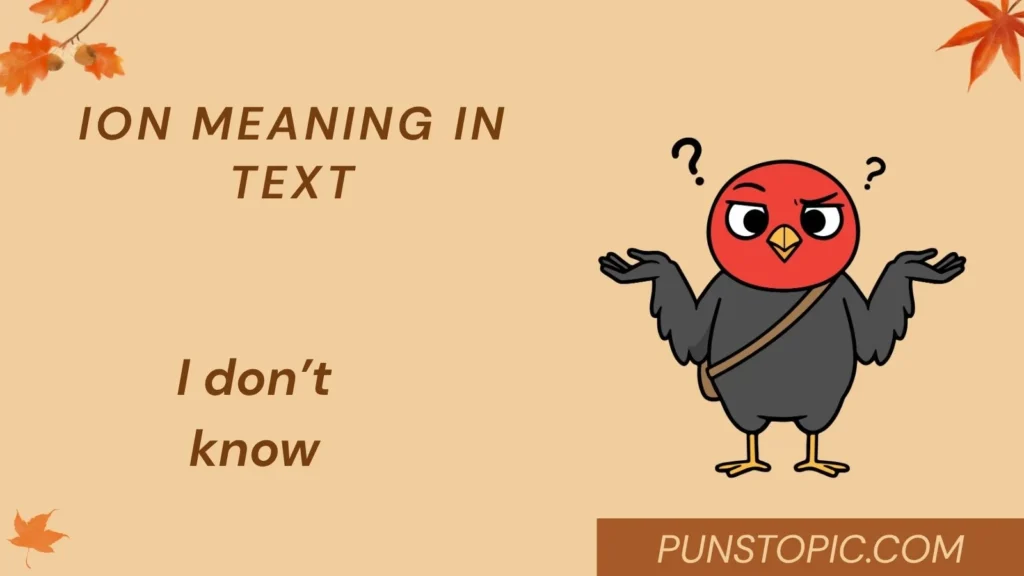
The term “ion” in text is a modern internet slang expression that often confuses new users. If you’ve seen someone type “ion know” or “ion care” in chats, you might wonder what it really means. Simply put, “ion” is a casual shorthand for “I don’t” in informal digital conversations.
It is widely used on platforms like TikTok, Snapchat, Instagram, and WhatsApp to make typing faster and more relaxed. People prefer slang like this because it feels natural, expressive, and fits the fast pace of online chatting.
Search interest around “ion meaning in text” has increased as more users encounter it in comments, memes, and short videos. It is not a formal word but a phonetic style abbreviation used in spoken like typing.
In this guide, you’ll learn everything about its meaning, origin, usage, and how to respond when someone uses it in conversation.
What Does ION Mean in Text & Chat?
In texting and online slang, “ion” means “I don’t.” It is a shortened, phonetic way of typing based on how people naturally speak in casual English. Instead of writing the full phrase, users combine sounds to make communication faster.
For example:
- “ion know” = I don’t know
- “ion care” = I don’t care
- “ion think so” = I don’t think so
This slang is mostly used in informal conversations, especially in memes, short replies, and social media comments. It is not grammatically correct in formal English, but it is widely understood in digital culture. The purpose is simplicity, speed, and style.
It is important to note that “ion” in texting is different from the scientific term ion (charged particle). Context decides the meaning.
Full Form, Stands For & Short Meaning of ION
In chat language, ION stands for “I don’t.” It does not have a formal acronym structure like business or technical abbreviations. Instead, it is a phonetic contraction.
Short meaning:
- ION = I don’t
It works by blending spoken pronunciation into text form. When people speak quickly, “I don’t” often sounds like “ion” or “eyen.” That sound is then written directly in chats.
Key points:
- Not an official abbreviation
- Based on pronunciation
- Used only in informal digital slang
- Common in Gen Z texting style
This makes it part of modern internet language evolution rather than standard grammar.
Origin, History & First Known Use of ION
The slang “ion” emerged from African American Vernacular English (AAVE) and online urban slang communities. It became more visible through music lyrics, social media platforms, and short-form video apps.
Over time, TikTok and Twitter (now X) helped spread it globally. Users started adopting it in captions and comments because it felt expressive and natural. Instead of typing full sentences, people preferred short, punchy expressions like “ion know” or “ion care.”
Its popularity grew alongside meme culture in the late 2010s and early 2020s. Today, it is part of mainstream internet slang, especially among teenagers and young adults.
How People Use ION in Daily Conversations
People use ion in casual chats to sound relaxed and quick. It is rarely used in professional communication.
Common usage examples:
- “ion feel like going out 😴”
- “ion think that’s true”
- “ion wanna talk rn”
It is often used when someone wants to express:
- Disinterest
- Uncertainty
- Casual refusal
The tone is usually informal and emotional. It helps messages feel more like spoken language rather than written text. However, using it with teachers, employers, or formal emails is not appropriate.
ION Meaning Across WhatsApp, Instagram, TikTok & Snapchat
On different platforms, ION keeps the same meaning but changes in usage style:
- WhatsApp: Used in casual friend chats
Example: “ion know what happened 😂” - Instagram: Common in comments and DMs
Example: “ion get this trend” - TikTok: Very popular in captions and voiceovers
Example: “ion care anymore 💀” - Snapchat: Used in quick, emotional replies
Example: “ion wanna go out rn”
On TikTok especially, it is part of viral slang culture. It often appears in humorous or dramatic content.
Different Meanings of ION in Other Fields
Outside texting, ION has completely different meanings:
- Science: Ion = charged atom or molecule
- Business: “In Other News” (rare usage in writing)
- Technology: Sometimes used as brand or system name
Because of this, context is very important. In science class, “ion” has nothing to do with slang. But in chats, it almost always means “I don’t.”
Common Confusions, Mistakes & Wrong Interpretations
Many people misunderstand “ion” because it has multiple meanings.
Common mistakes:
- Thinking it relates to electricity or chemistry
- Believing it is a typo
- Assuming it means “I on”
The biggest confusion happens when users switch between academic and social media contexts. If you see it in TikTok comments or chats, it is slang. If you see it in textbooks, it is scientific.
Similar Terms, Alternatives & Related Slang
Other slang expressions similar to “ion” include:
- “idk” = I don’t know
- “imma” = I am going to
- “iont” = I don’t (variation)
- “nah” = no / not really
- “don’t” (full form alternative)
These expressions all belong to informal internet language used for quick communication.
Examples of ION in Real Chat Situations
Here are some natural examples:
- Friend 1: “You coming to the party?”
Friend 2: “ion think so 😭” - Friend 1: “Did you like the movie?”
Friend 2: “ion care about it tbh” - Friend 1: “Why are you quiet?”
Friend 2: “ion know lol”
These examples show how casual and emotional the slang can be.
How to Reply When Someone Says ION
Your reply depends on context:
- If they say “ion know” →
“Haha same, we’ll figure it out 😄” - If they say “ion care” →
“Alright, fair enough 👍” - If they sound upset →
“You good? Want to talk?”
Always match their tone. Since “ion” is informal, responses should also stay casual.
Is ION Still Popular? Trends & Online Usage
Yes, ion is still popular, especially among Gen Z users on TikTok and Instagram. However, like most slang, its usage evolves over time. Some people use it daily, while others switch to newer slang trends.
It remains common in:
- Short videos
- Memes
- Chat replies
- Reaction comments
While not new, it is still part of active internet vocabulary.
Here are fresh, non-repetitive H2 headings with useful details you can directly add to your article about “ion meaning in text”:
Why “ION” Became Popular in Gen Z Slang
The rise of “ion” is closely tied to Gen Z communication style, where speed and expression matter more than grammar rules. Young users prefer short, phonetic slang that feels natural in speech. Social media platforms like TikTok and Twitter helped spread it through captions, memes, and viral audio trends.
Unlike traditional abbreviations, “ion” feels more like spoken language written down, which makes conversations more relatable and emotional. Its popularity also comes from rap lyrics and online storytelling culture, where casual grammar reflects real-life speech patterns.
How “ION” Changes Sentence Tone in Chats
Using “ion” doesn’t just shorten words—it changes the emotional tone of a message. It often makes sentences sound more relaxed, blunt, or even slightly dramatic. For example, “I don’t care” feels neutral, but “ion care” can sound more casual or dismissive depending on context. This emotional shift is one reason why people prefer it in texting. It helps express attitude without adding extra words or emojis. In many cases, it makes communication feel more “real” or conversational.
Grammar Impact: Why “ION” Is Not Correct English
From a grammar perspective, “ion” is incorrect because it breaks standard English structure. It removes auxiliary verbs and contractions like “don’t.” However, internet slang does not follow formal grammar rules. Instead, it prioritizes speed and sound. Linguists often call this “phonetic spelling,” where writing imitates speech. While it is acceptable in informal chats, it should never be used in academic essays, professional emails, or official documents. Understanding this difference is important for proper communication in different settings.
Regional Influence on the Use of “ION”
The usage of “ion” is more common in certain English-speaking regions, especially in the United States, where AAVE (African American Vernacular English) heavily influences online slang. However, due to global social media exposure, it has spread to users in Asia, Europe, and the Middle East. In some regions, people adopt it simply because they see it in memes or TikTok content, even if it is not part of their local speech style. This shows how digital culture is shaping modern language globally.
Emotional Context: When “ION” Sounds Rude or Friendly
Depending on context, “ion” can sound either chill or rude. For example, “ion know” in a funny conversation feels harmless, but “ion care” in an argument can seem dismissive or cold. Tone markers like emojis, punctuation, or timing often change how the message is received. This makes “ion” a flexible but risky slang term because it can be misunderstood easily. Users often adjust it with emojis like 😂 or 😭 to soften the tone.
Evolution of “ION” in Internet Language
Internet slang evolves quickly, and “ion” is part of a larger trend of compressing language. Earlier slang like “idk,” “brb,” and “lol” came from keyboard efficiency. But modern slang like “ion,” “finna,” and “fr” is more speech-based. This evolution shows a shift from typed shortcuts to spoken-style texting. Over time, some slang fades, but widely used ones like “ion” remain due to constant social media exposure.
Role of Music and Pop Culture in Spreading “ION”
Music, especially rap and hip-hop, has played a major role in making “ion” mainstream. Artists often use casual speech patterns in lyrics to reflect real-life conversations. When fans hear these phrases in songs, they naturally adopt them in chats. TikTok also amplifies this effect by turning lyrics into viral sounds. This combination of music and short-form video content has made “ion” a recognizable global slang term.
Psychological Reason Behind Using “ION” in Chats
People often use slang like “ion” because it creates a sense of identity and belonging. It signals that the user is part of a modern, internet-savvy community. It also reduces effort in communication, making texting feel faster and easier.
Psychologically, shorter expressions can feel more direct and honest, which is why many users prefer them during emotional conversations or quick replies.
FAQs:
1. What does ion mean in texting?
It means “I don’t” in informal online chats.
2. Is ion a real English word?
No, it is slang based on spoken pronunciation.
3. Is ion used in formal writing?
No, it is only used in casual conversations.
4. What is the difference between ion and I don’t?
They mean the same thing, but “ion” is slang and shorter.
5. Why do people use ion instead of I don’t?
Because it is faster, trendier, and fits social media style.
Conclusion:
The ion meaning in text is simple once you understand its slang roots. It stands for “I don’t” and is widely used in casual online communication. From TikTok captions to Instagram comments, it helps people express thoughts quickly and naturally. However, it should be avoided in formal writing or professional settings.
As internet language continues to evolve, slang like “ion” shows how users creatively shorten expressions for speed and style. Whether you love or dislike it, it has become a recognizable part of modern digital communication.
Understanding it helps you stay updated with online trends and better connect in chats and social media conversations