If you’ve spent time on social media, in group chats, or texting friends, you’ve probably seen the term FOMO. Many people search for the FOMO meaning in text because it appears frequently in online conversations, captions, comments, and messages. While the term is simple, it carries a powerful meaning that reflects how people feel in today’s connected world.
FOMO is often used when someone feels left out of an event, activity, or experience that others are enjoying. Whether it’s a party, vacation, trending challenge, or social gathering, FOMO captures that feeling of missing something exciting.
In this guide, you’ll learn what FOMO means, where it came from, how people use it in conversations, and why it remains one of the most popular internet terms today.
What Does FOMO Mean in Text & Chat?
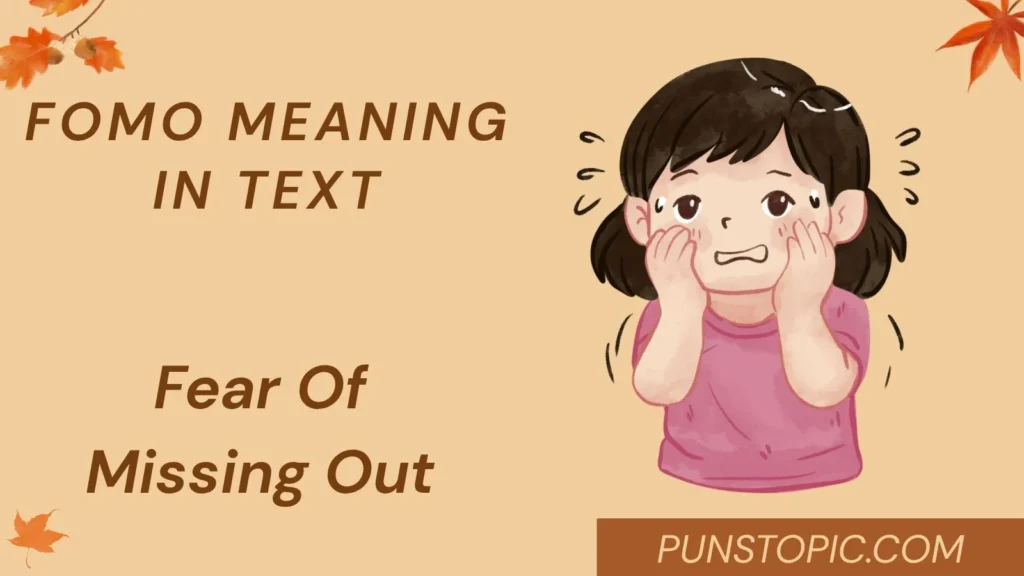
In texting and online chat, FOMO means Fear Of Missing Out.
It describes the feeling that other people are having fun, enjoying experiences, or taking advantage of opportunities while you are not involved. This emotion can make someone feel excluded, curious, or even anxious.
When used in text messages, FOMO is usually casual and often appears when discussing social events, travel plans, or exciting activities.
Quick Examples
- “You guys went to the concert without me? Major FOMO!”
- “Seeing everyone’s vacation pictures gives me FOMO.”
- “I almost bought tickets because of FOMO.”
The term doesn’t always indicate serious anxiety. In many conversations, people use it humorously to express mild jealousy or disappointment.
Common Situations
- Missing a party
- Not attending an event
- Seeing friends travel
- Missing limited-time sales
- Not joining a trend
Because social media constantly shows what others are doing, FOMO has become a common part of modern communication.
Full Form, Stands For & Short Meaning of FOMO
The full form of FOMO is:
Fear Of Missing Out
Short Meaning
FOMO means feeling worried, disappointed, or left out because you are not participating in something that others are enjoying.
Simple Definition
FOMO is the fear that you’re missing an exciting experience, opportunity, event, or trend.
People use this abbreviation because it quickly communicates a feeling that many people understand.
Why It’s Popular
The term became popular because it describes a very common experience in the digital age. Social media platforms allow people to see highlights from other people’s lives, making comparisons more common.
Easy Breakdown
- F = Fear
- O = Of
- M = Missing
- O = Out
The abbreviation is short, memorable, and easy to use in texting, which helped it spread across the internet.
Origin, History & First Known Use of FOMO
Although the feeling itself has existed for centuries, the word FOMO is relatively modern.
The phrase gained popularity during the early 2000s as internet usage and social networking platforms expanded. As people became more connected online, they could constantly see updates about what others were doing.
Researchers, marketers, and psychologists later adopted the term to describe a growing social phenomenon.
How It Spread
Several factors helped FOMO become mainstream:
- Rise of social media
- Smartphone notifications
- Online communities
- Real-time sharing
- Influencer culture
As platforms like Facebook, Instagram, and later TikTok grew, the term entered everyday language.
Why It Matters
FOMO became more than internet slang. It evolved into a concept discussed in psychology, marketing, business, and digital behavior studies.
Today, millions of people use the term daily both online and offline.
How People Use FOMO in Daily Conversations
FOMO appears in many different situations and is often used casually.
People use it to explain why they want to attend an event, join an activity, or participate in a trend.
Examples
- “I booked the trip because of FOMO.”
- “Everyone’s going, and now I have FOMO.”
- “You’re making me feel FOMO with those photos.”
Common Conversation Types
Social Events
“Everyone from work is going tonight. I have FOMO.”
Travel
“Your beach pictures are giving me serious FOMO.”
Shopping
“The sale ends tonight and my FOMO is kicking in.”
Entertainment
“I haven’t watched the new series yet, and the FOMO is real.”
People often use FOMO jokingly, but sometimes it reflects genuine feelings about missing opportunities.
FOMO Meaning Across WhatsApp, Instagram, TikTok & Snapchat
The meaning of FOMO remains mostly the same across social platforms, but the context may differ.
Used in group chats when someone misses plans.
Example:
- “Looks like you all had fun 😭 FOMO!”
Often appears in captions and comments.
Example:
- “These vacation pics are giving me FOMO.”
TikTok
Used when users see trends, experiences, or viral events.
Example:
- “TikTok is giving me travel FOMO.”
Snapchat
Common in stories showing parties, gatherings, and adventures.
Example:
- “Watching your story and getting FOMO 😂”
Why Social Media Increases FOMO
Social platforms highlight exciting moments, making people feel they are missing experiences happening elsewhere.
This constant exposure is one reason the term remains so popular.
Different Meanings of FOMO in Other Fields
Although FOMO usually means Fear Of Missing Out, some industries use the concept differently.
Marketing
Businesses use FOMO to encourage quick decisions.
Examples:
- Limited-time offers
- Flash sales
- Countdown timers
Investing
Investors may experience FOMO when stock prices rise rapidly.
Example:
- Buying a stock because everyone else is investing.
Gaming
Gamers use FOMO when discussing limited events or rewards.
Example:
- Missing a special in-game item.
Business
Companies sometimes use FOMO-based strategies to increase engagement and participation.
Despite these applications, the most common meaning remains Fear Of Missing Out.
Common Confusions, Mistakes & Wrong Interpretations
People occasionally misunderstand FOMO.
Common Mistakes
Thinking It Means Excitement
FOMO is not excitement itself. It is the fear of missing an exciting experience.
Using It for Every Missed Event
FOMO usually refers to something desirable or important.
Confusing It With Regret
Regret happens after a decision. FOMO often happens before or during an event.
Incorrect Example
- “I forgot my keys. FOMO.”
Correct Example
- “Everyone went to the concert without me. FOMO.”
Understanding the emotional aspect helps people use the term correctly.
Similar Terms, Alternatives & Related Slang
Several internet terms are related to FOMO.
JOMO
Joy Of Missing Out
The opposite of FOMO. It means enjoying your time away from social activities.
YOLO
You Only Live Once
Used to encourage taking opportunities.
###OMO
Fear of missing opportunities in general.
Hype
Excitement surrounding a trend or event.
Trending Slang Related to FOMO
- YOLO
- JOMO
- Main Character Energy
- Vibes
- Hype
- Flex
Internal Linking Suggestions
You can link this article to:
- YOLO Meaning in Text
- JOMO Meaning in Text
- IMO Meaning in Text
- TBH Meaning in Text
- SMH Meaning in Text
- POV Meaning in Text
Examples of FOMO in Real Chat Situations
Here are realistic examples showing how people use FOMO in messages.
Example 1
Friend: “We’re all going to the beach tomorrow.”
You: “Now I have serious FOMO 😭”
2
Friend: “Look at these concert pictures!”
You: “Stop giving me FOMO 😂”
3
Friend: “Everyone bought tickets already.”
You: “My FOMO is telling me to buy one too.”
4
Friend: “You missed the best part!”
You: “The FOMO is real 😩”
Quick Examples
- “Seeing those photos gave me FOMO.”
- “I joined because of FOMO.”
- “My FOMO convinced me.”
- “You’re creating FOMO.”
- “That event caused major FOMO.”
How to Reply When Someone Says FOMO
When someone mentions FOMO, your response depends on the conversation.
Friendly Responses
- “You should come next time!”
- “We’ll save you a spot.”
- “Don’t worry, there will be another event.”
Funny Responses
- “Mission accomplished 😂”
- “The FOMO is working!”
- “You know you want to join.”
Supportive Responses
- “We’ll send you pictures.”
- “You aren’t missing much.”
- “We’ll plan another one soon.”
Chat Example
Friend: “I’m getting FOMO.”
You: “Come join us! 😄”
Simple, positive replies usually work best.
Is FOMO Still Popular? Trends & Online Usage
Yes, FOMO remains highly popular.
Despite new slang appearing every year, FOMO continues to be widely used because the feeling it describes is universal.
Reasons It Remains Relevant
- Social media growth
- Online communities
- Digital lifestyles
- Travel culture
- Limited-time experiences
Where It’s Most Common
- Instagram captions
- TikTok comments
- WhatsApp chats
- Snapchat stories
- Online forums
Even younger generations continue using the term because it accurately describes a common social experience.
As long as people share experiences online, FOMO will likely remain part of internet culture.
FOMO has become more common because people are connected online almost all the time. Social media platforms allow users to see vacations, parties, achievements, and daily activities from friends, influencers, and celebrities. Since people often share only the best moments of their lives, viewers may feel like they are missing out on exciting experiences. This constant exposure can create a sense of comparison and make ordinary days seem less interesting than they really are.
Key Factors That Trigger FOMO
- Social media scrolling
- Event invitations
- Viral trends
- Limited-time opportunities
- Peer pressure
- Online comparisons
Psychological Impact of FOMO
Although FOMO is often used jokingly in text messages, it can affect emotions and decision-making. Some people feel pressure to stay connected, attend events, or participate in activities simply because others are doing so. Over time, excessive FOMO may contribute to stress, distraction, or dissatisfaction.
Possible Effects of FOMO
- Difficulty focusing
- Increased social comparison
- Impulsive decisions
- Fear of being left behind
- Constant checking of notifications
Recognizing these feelings can help people maintain a healthier relationship with social media and online interactions.
FOMO in Online Shopping and Marketing
Businesses frequently use FOMO-based marketing strategies to encourage customers to act quickly. Limited-time deals, countdown timers, and low-stock notifications are designed to create urgency.
Common Marketing Examples
- “Only 3 items left!”
- “Sale ends tonight!”
- “Limited edition release.”
- “Offer available for 24 hours.”
These tactics work because people naturally dislike the idea of missing a valuable opportunity.
FOMO Among Teenagers and Young Adults
Teenagers and young adults often encounter FOMO due to active social lives and heavy social media usage. School events, social gatherings, and online trends can create pressure to stay involved in everything happening around them.
Many young people use FOMO casually in chats, but the feeling behind the word can sometimes be stronger than it appears. Learning to balance online and offline life can help reduce unnecessary stress.
FOMO vs JOMO: Understanding the Difference
FOMO and JOMO represent opposite mindsets.
| FOMO | JOMO |
|---|---|
| Fear Of Missing Out | Joy Of Missing Out |
| Worry about being excluded | Enjoying personal time |
| Driven by comparison | Driven by contentment |
| Focused on external events | Focused on personal well-being |
JOMO encourages people to appreciate their own choices rather than worrying about what others are doing.
Signs That Someone Is Experiencing FOMO
Not everyone openly says they have FOMO. Sometimes their behavior reveals it.
Common Signs
- Frequently checking social media
- Constantly asking about events
- Feeling upset about missing plans
- Joining activities reluctantly
- Comparing experiences with others
These behaviors can indicate a fear of being excluded from social opportunities.
How to Overcome FOMO in Everyday Life
Managing FOMO starts with understanding that social media rarely shows the complete picture. Most posts highlight positive moments rather than everyday realities.
Helpful Tips
- Limit social media usage
- Focus on personal goals
- Practice gratitude
- Spend time offline
- Avoid unnecessary comparisons
- Appreciate current experiences
Small mindset changes can significantly reduce feelings of missing out.
FOMO in Gaming Communities
Gaming communities often use FOMO when discussing limited-time events, seasonal rewards, or exclusive content. Players may feel pressure to participate before opportunities disappear.
Gaming Examples
- Special event skins
- Limited-edition rewards
- Seasonal battle passes
- Time-sensitive challenges
Developers sometimes intentionally create scarcity to increase player engagement.
How Brands Use FOMO on Social Media
Modern brands frequently create content that encourages quick action. This approach can increase engagement and sales by making opportunities feel exclusive.
Examples of Social Media FOMO
- Flash sales
- Exclusive member access
- Early-bird discounts
- Limited product launches
- Countdown stories
Consumers who understand these tactics can make more thoughtful purchasing decisions.
The Future of FOMO in Internet Culture
As technology continues to evolve, FOMO is likely to remain part of online culture. New platforms, virtual experiences, and digital communities may create new ways for people to feel connected—or left out.
Despite changing trends, the core emotion behind FOMO remains universal. People naturally want to feel included, informed, and involved in meaningful experiences. This is why the term continues to stay relevant across generations.
Fun Facts About FOMO
- FOMO is one of the most recognized internet acronyms worldwide.
- The term became mainstream alongside the rise of social media.
- It is commonly used in psychology, marketing, and business discussions.
- FOMO can influence both social and financial decisions.
- The opposite term, JOMO, gained popularity as a response to digital overload.
FAQs:
What is the full form of FOMO?
FOMO stands for Fear Of Missing Out.
What does FOMO mean in texting?
It means feeling left out because others are experiencing something enjoyable that you are missing.
Is FOMO a negative feeling?
It can be, but many people use it humorously in casual conversations.
What is the opposite of FOMO?
The opposite is JOMO, which means Joy Of Missing Out.
Is FOMO still used in 2026?
Yes. It remains a common term across social media and messaging platforms.
Can FOMO affect decision-making?
Yes. People sometimes make purchases or join activities because they fear missing opportunities.
Conclusion:
Understanding the FOMO meaning in text helps you better understand modern online conversations. FOMO stands for Fear Of Missing Out, a feeling that occurs when you think others are enjoying experiences that you’re not part of. The term is commonly used on WhatsApp, Instagram, TikTok, Snapchat, and many other platforms.
While FOMO often appears in a humorous way, it reflects a real emotion that many people experience in a connected digital world. From social events and travel plans to trends and limited time offers, the term continues to play an important role in online communication.
Knowing how and when to use FOMO can help you communicate more naturally and understand internet culture with greater confidence.