If you’ve ever received a message saying “OML!” and wondered what it means, you’re not alone. Online conversations move fast, and people often use abbreviations to express emotions quickly. One abbreviation that appears often in texts, chats, comments, and social media posts is OML.
People search for the meaning of OML because they see it on platforms like WhatsApp, Instagram, TikTok, Snapchat, and Messenger. Depending on the context, OML can show surprise, excitement, shock, frustration, or disbelief.
Understanding internet slang helps you communicate better and avoid misunderstandings. In this guide, you’ll learn the complete meaning of OML, where it came from, how people use it, examples from real conversations, and whether it’s still popular today.
By the end, you’ll know exactly what OML means whenever it appears in a message.
What Does OML Mean in Text & Chat?
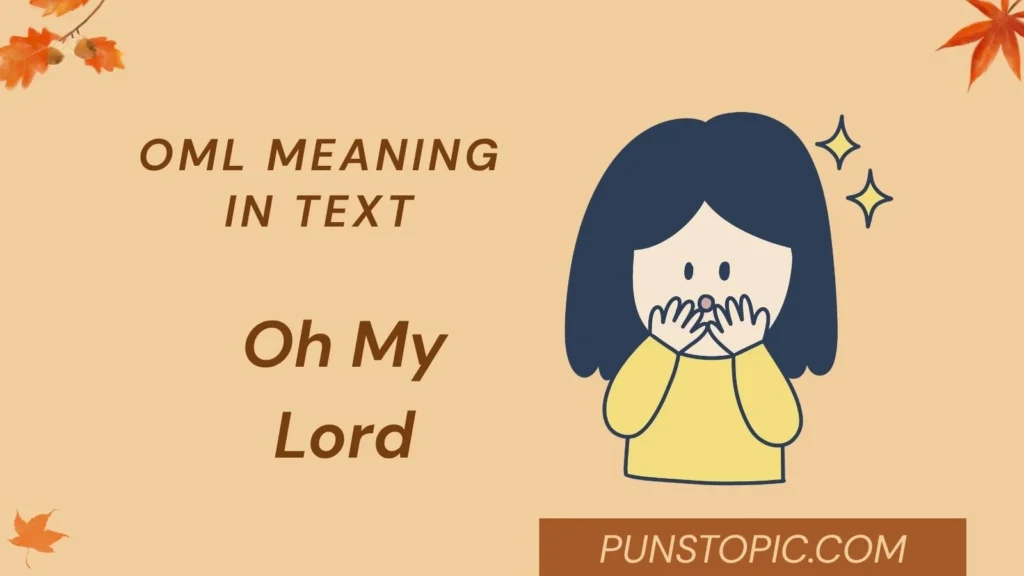
In text messages and online chats, OML usually stands for “Oh My Lord.”
It is an expression people use when they feel a strong emotion. It can show:
- Surprise
- Shock
- Excitement
- Amazement
- Frustration
- Disbelief
OML works similarly to expressions like:
- OMG (Oh My God)
- Oh wow
- No way
- Are you serious?
Many people prefer OML because it sounds less direct than OMG while still expressing the same level of emotion.
Quick Examples
- “OML, I can’t believe I won!”
- “OML, that movie ending was confused.”
- “OML, look at this cute puppy! 🐶”
- “OML, I forgot my homework.”
The exact meaning depends on the tone of the conversation. In a positive situation, OML can express excitement. In a negative situation, it can show frustration or shock.
Because texting is often informal, OML is mostly used among friends, family members, classmates, and social media users rather than in professional communication.
Full Form, Stands For & Short Meaning of OML
The most common full form of OML is:
OML = Oh My Lord
This phrase is used as an emotional reaction. It helps people respond quickly when something unexpected happens.
Short Meaning
The short meaning of OML is:
“I am surprised, shocked, excited, or overwhelmed.”
Depending on context, OML can mean:
- “That’s unbelievable.”
- “Wow!”
- “I can’t believe it.”
- “That’s amazing.”
- “This is shocking.”
Why People Use OML
People use OML because:
- It saves typing time.
- It sounds casual and friendly.
- It expresses strong emotions quickly.
- It fits well in texting and social media conversations.
Comparison with Similar Terms
| Abbreviation | Meaning |
|---|---|
| OML | Oh My Lord |
| OMG | Oh My God |
| OMW | On My Way |
| IDK | I Don’t Know |
| TBH | To Be Honest |
Among these abbreviations, OML is often used when someone wants to react dramatically without typing a full sentence.
Origin, History & First Known Use of OML
Like many internet abbreviations, OML developed as digital communication became faster. Early online chat rooms, forums, and instant messaging services encouraged users to shorten common expressions.
The phrase “Oh My Lord” existed long before the internet. However, the abbreviation OML became popular when texting and social media usage increased during the late 2000s and early 2010s.
As smartphones became common, users started replacing longer phrases with short acronyms. OML naturally joined other popular abbreviations such as:
- LOL
- BRB
- OMG
- SMH
- ROFL
Social media platforms helped spread OML to younger audiences. As people shared reactions in comments and direct messages, the abbreviation became widely recognized.
Today, OML remains part of internet slang culture. Although it may not be as common as OMG, it is still frequently used across social platforms and messaging apps.
How People Use OML in Daily Conversations
OML appears in many everyday conversations. It usually acts as an emotional reaction rather than a complete statement.
Expressing Excitement
- “OML, I got concert tickets!”
- OML, this food is amazing!”
Showing Shock
- “OML, did that really happen?”
- “OML, I can’t believe the score.”
Responding to Good News
- “OML, congratulations!”
- “OML, that’s awesome!”
Reacting to Mistakes
- “OML, I sent the message to the wrong person.”
- “OML, I forgot my keys again.”
Daily Usage Examples
- Friend: “I passed my driving test.”
- You: “OML, that’s great! 🎉”
- Friend: “My phone fell into the pool.”
- You: “OML, seriously?”
Because OML is informal, it works best in personal conversations rather than business emails or professional messages.
OML Meaning Across WhatsApp, Instagram, TikTok & Snapchat
The meaning of OML stays mostly the same across platforms, but the context can vary.
On WhatsApp, OML is often used in private chats and group conversations.
Example:
- “OML, this family group never stops talking 😂”
Users commonly write OML in comments and captions.
Example:
- “OML, this outfit is stunning!”
TikTok
TikTok users often react to videos using OML.
Example:
- “OML, I watched this five times!”
Snapchat
On Snapchat, OML appears in quick reactions to stories and snaps.
Example:
- “OML, where is this place? 😍”
Social Media Summary
Across all major platforms, OML generally means:
- Surprise
- Excitement
- Shock
- Amazement
The abbreviation remains easy to understand because its emotional meaning is usually obvious from the surrounding conversation.
Different Meanings of OML in Other Fields
Although “Oh My Lord” is the most common meaning online, OML can occasionally have other meanings in specialized fields.
Some examples include:
- Organizational names
- Educational programs
- Technical abbreviations
- Business terms
However, when you see OML in:
- Text messages
- Social media comments
- Snapchat conversations
- WhatsApp chats
It almost always means Oh My Lord.
To understand any uncommon meaning, look at the surrounding context. Professional documents may use OML differently than casual online conversations.
Common Confusions, Mistakes & Wrong Interpretations
Many people confuse OML with other abbreviations.
OML vs OMG
Both express surprise.
- OML = Oh My Lord
- OMG = Oh My God
OML vs OMW
These are completely different.
- OML = Oh My Lord
- OMW = On My Way
OML vs LOL
- OML expresses emotion.
- LOL means laughing.
Common Mistakes
❌ Thinking OML always means something religious.
✔ In most cases, it’s simply an emotional reaction.
❌ Assuming it has only one emotion.
✔ OML can express excitement, shock, frustration, or amazement.
Understanding context helps avoid confusion.
Similar Terms, Alternatives & Related Slang
If you see OML, you may also encounter similar slang expressions.
Popular Alternatives
- OMG
- Wow
- No way
- Seriously?
- SMH
- Jeez
- Gosh
- Oh wow
Related Internet Slang
- LOL — Laughing Out Loud
- TBH — To Be Honest
- IDK — I Don’t Know
- IMO — In My Opinion
- BRB — Be Right Back
Internal Linking Suggestions
You may also read:
- OMG Meaning in Text
- SMH Meaning in Text
- TBH Meaning in Text
- IDK Meaning in Text
- BRB Meaning in Text
- ILY Meaning in Text
These terms often appear alongside OML in online conversations.
Examples of OML in Real Chat Situations
Here are realistic examples showing how people use OML.
Excitement
Alex: I won the giveaway!
Sarah: OML, that’s amazing! 🎉
Shock
Jake: The concert sold out in two minutes.
Emma: OML, already?!
Surprise
Liam: Guess who followed me back?
Mia: OML, tell me now! 😲
Frustration
Chris: My laptop crashed again.
Noah: OML, that’s so annoying.
Happiness
Sophia: We got accepted!
Olivia: OML, I’m so happy! ❤️
These examples show how flexible OML can be in everyday conversations.
How to Reply When Someone Says OML
The best reply depends on why the person used OML.
1 If They Are Excited
- “I know, right?”
- “It’s awesome!”
- “I’m excited too!”
2 If They Are Shocked
- “I couldn’t believe it either.”
- “confused, isn’t it?”
3 If They Are Surprised
- “Yep, it’s true.”
- “I was shocked too.”
4 If They Are Frustrated
- “That really sucks.”
- “Hope things get better.”
Quick Reply Examples
- “OML!”
- “I know 😂”
- “Right?!”
- “Exactly!”
- “Same here!”
Matching the emotion usually creates the best response.
Is OML Still Popular? Trends & Online Usage
Yes, OML is still used online today.
While abbreviations constantly change, OML remains recognizable across many social platforms. Younger users often mix it with emojis, GIFs, and modern slang.
Why It Remains Popular
- Short and easy to type
- Expresses strong emotions
- Works on every social platform
- Familiar to many internet users
Current Trend
Although OMG remains more common overall, OML continues to appear regularly in:
- TikTok comments
- Snapchat messages
- Instagram captions
- WhatsApp chats
- Online gaming conversations
Because internet slang evolves quickly, usage may rise or fall over time, but OML remains widely understood by active social media users.
Psychological Meaning Behind Using OML in Digital Communication
OML is more than slang—it reflects emotional expression in fast digital chats. People use it to quickly release feelings like shock, joy, or frustration without writing full sentences. Psychologically, it acts as an emotional shortcut that reduces typing effort while still showing strong reaction. In online communication, where tone is often missing, OML helps add emotion and personality to messages.
Difference Between OML and Other Emotional Internet Expressions
OML is often confused with similar expressions, but each has a slightly different tone. OMG is more universal and widely used, while OML feels slightly softer or more expressive. Words like “WOW” are neutral, but OML adds emotional intensity. Compared to “SMH,” which shows disappointment, OML can be both positive and negative depending on context.
Situations Where You Should Avoid Using OML
Although OML is popular in casual chats, it is not suitable for every situation. It should be avoided in formal emails, workplace communication, academic writing, or professional discussions. Using slang like OML in serious environments may reduce clarity or appear unprofessional. It is best reserved for friends, social media, and informal messaging.
Role of Emojis When Using OML in Conversations
OML is often paired with emojis to make emotional meaning clearer. For example, OML 😂 shows laughter and surprise, while OML 😱 shows shock. Emojis help remove confusion and strengthen the emotional tone of the message. In modern texting culture, OML rarely appears alone—it is usually supported by visual expressions like emojis or GIFs.
How Gen Z and Millennials Use OML Differently
Different generations use OML in slightly different ways. Gen Z often uses it playfully with memes, sarcasm, or exaggerated reactions. Millennials may use it more literally as a reaction to real events. While both groups understand it, Gen Z tends to mix OML with other slang and emojis more frequently in creative ways.
Evolution of OML in Internet Slang Culture
OML is part of a larger evolution of internet language that began with early chatrooms and SMS texting. Over time, users created faster ways to express emotions, leading to abbreviations like LOL, OMG, and OML. Even though newer slang constantly appears, OML has remained stable because it is simple, expressive, and easy to understand across platforms.
How Brands and Influencers Use OML in Marketing Content
Brands and social media influencers sometimes use OML in captions or promotional content to appear more relatable. It helps create a casual, human tone that connects with younger audiences. For example, beauty influencers might write “OML this product is amazing 😍” to increase engagement and emotional impact.
Regional Differences in Understanding OML
Although OML is widely recognized globally, its usage can vary by region. In some areas, users prefer OMG, while OML appears more in specific online communities or platforms. In South Asian and Middle Eastern online spaces, OML is often understood but not as commonly used as OMG.
Why OML Became Popular in Meme Culture
OML became widely used in meme culture because it perfectly expresses exaggerated reactions. Memes often rely on humor, shock, or sarcasm, and OML fits naturally into these formats. It is commonly used in captions like “OML this is too funny 😂” or “OML I can’t believe this happened.”
Future of OML in Online Language Trends
The future of OML depends on evolving internet slang. While newer abbreviations appear constantly, OML is likely to remain in use because it is simple and emotionally flexible. However, its popularity may slowly decline as newer expressions and emojis become more dominant in digital communication.
FAQs:
What does OML mean in texting?
OML usually means “Oh My Lord.” It expresses surprise, excitement, shock, or disbelief.
Is OML the same as OMG?
They are very similar. Both express strong emotions, but OML stands for “Oh My Lord” while OMG stands for “Oh My God.”
What does OML mean on Snapchat?
On Snapchat, OML typically means “Oh My Lord” and is used as a reaction to a snap or story.
Is OML positive or negative?
It can be either. OML may express excitement about good news or frustration about bad news.
Do people still use OML?
Yes. OML is still used on social media, messaging apps, and online communities.
Can OML be used in professional messages?
It is generally considered informal and is best used in casual conversations.
Conclusion:
Understanding the OML meaning in text helps you keep up with modern online communication. In most situations, OML stands for “Oh My Lord” and is used to express surprise, excitement, shock, amazement, or frustration.
Whether you’re chatting on WhatsApp, commenting on Instagram, scrolling through TikTok, or sending snaps on Snapchat, you’ll likely come across this abbreviation sooner or later.
The good news is that OML is easy to understand once you know the context. It works much like OMG and helps people react quickly during conversations. As internet slang continues to evolve, OML remains a simple and popular way to show emotion online.
The next time someone sends “OML,” you’ll know exactly what they mean and how to respond naturally.